Porcelain Patio Cost Huntingdon: A Real 56m² Godmanchester Job
A 56m² porcelain patio, supplied and fitted properly - full sub-base, mortar bed, drainage falls and slurry priming - costs around £259 per m² on a real job we've just completed near Godmanchester: £14,500 in total.
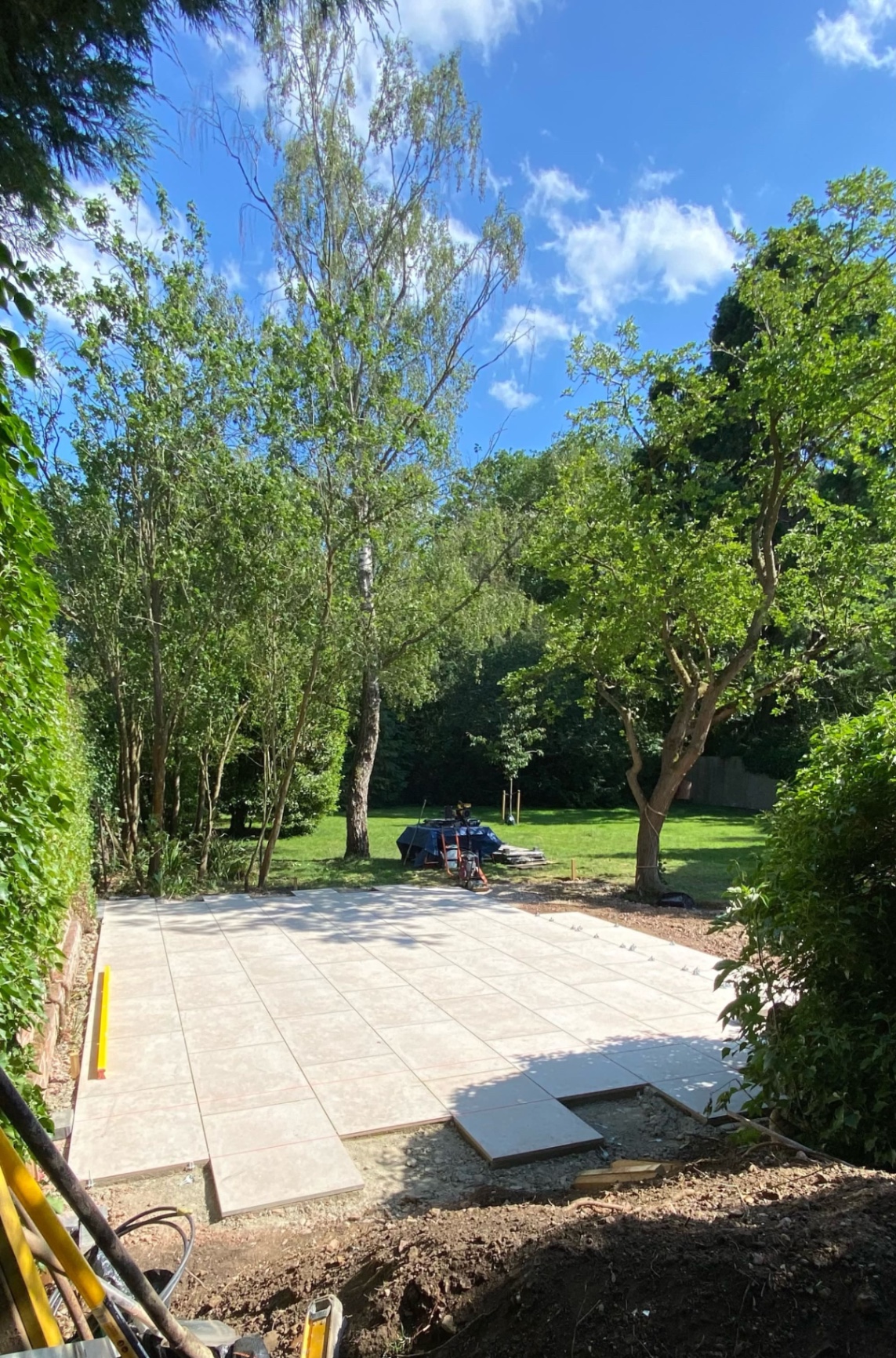
That's higher than the £80-150/m² you'll see quoted on most generic cost-guide sites. There's a reason for that, and it's worth understanding before you compare quotes on price alone.
Why this job cost more than the "average" porcelain patio
Generic online guides quote averages because they're describing a generic job: a simple rectangle, flat stable ground, a standard 100mm sub-base, dot-and-dab adhesive instead of a full mortar bed. This job was never going to match that average, for two separate reasons.
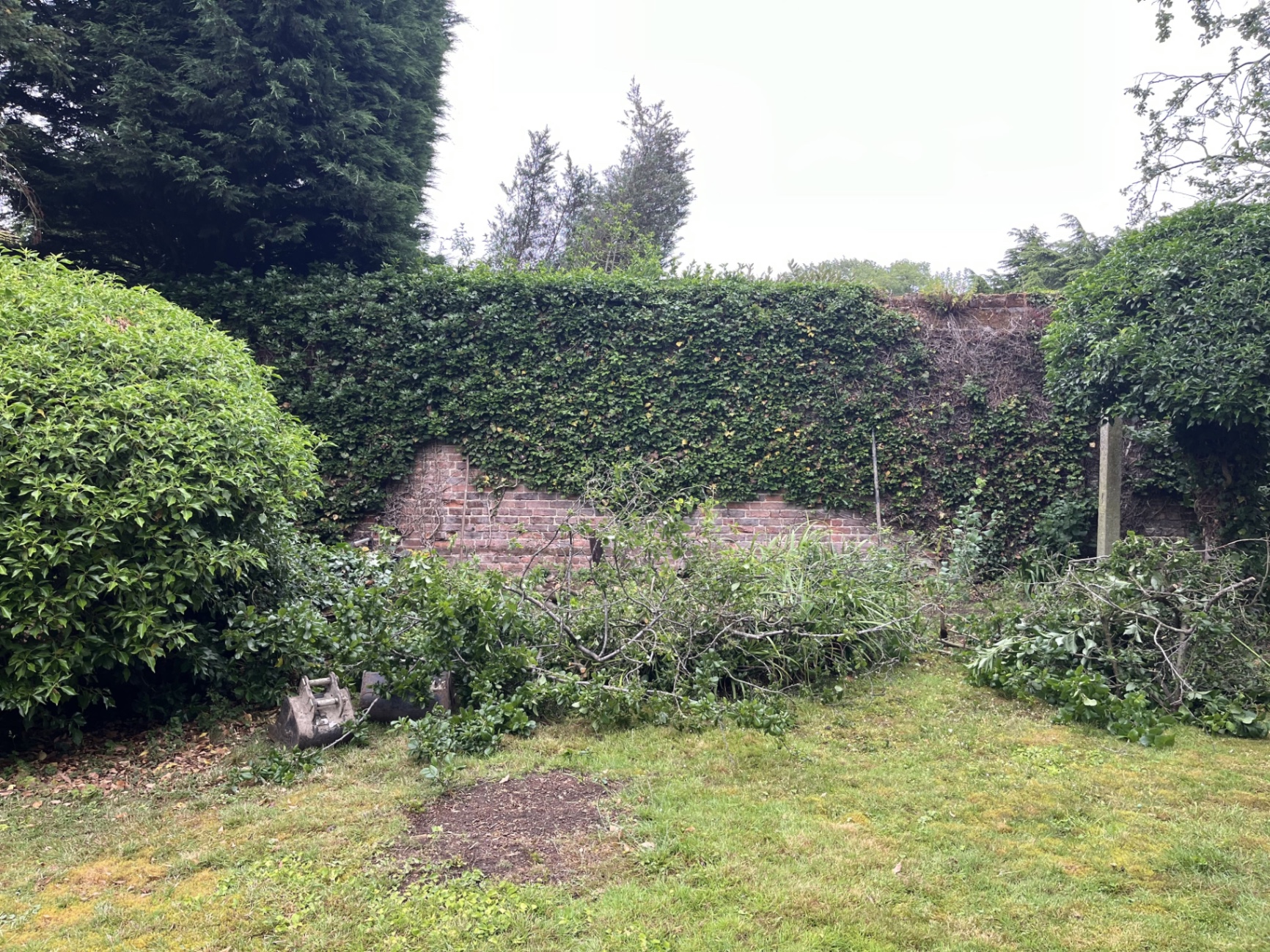
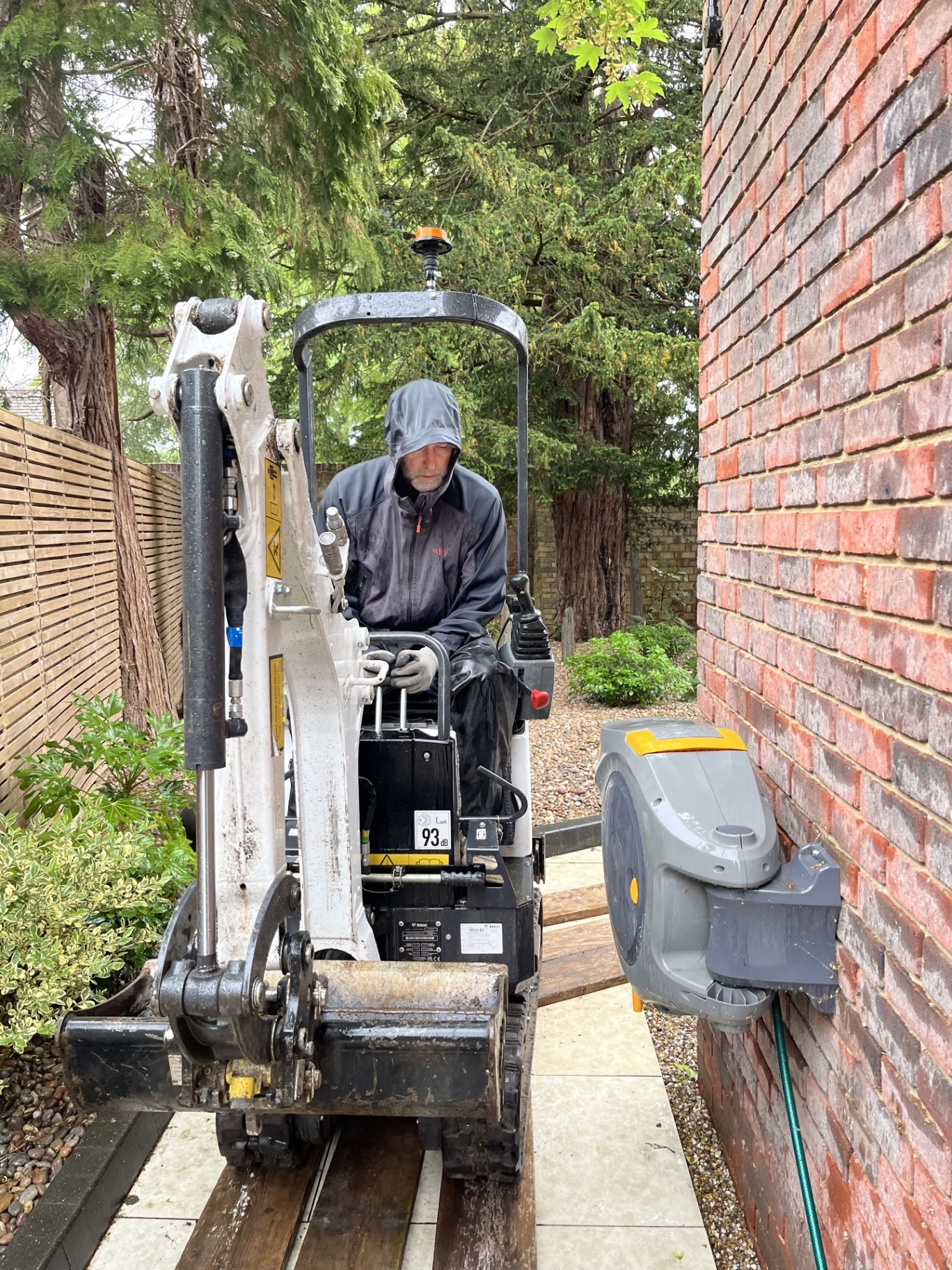
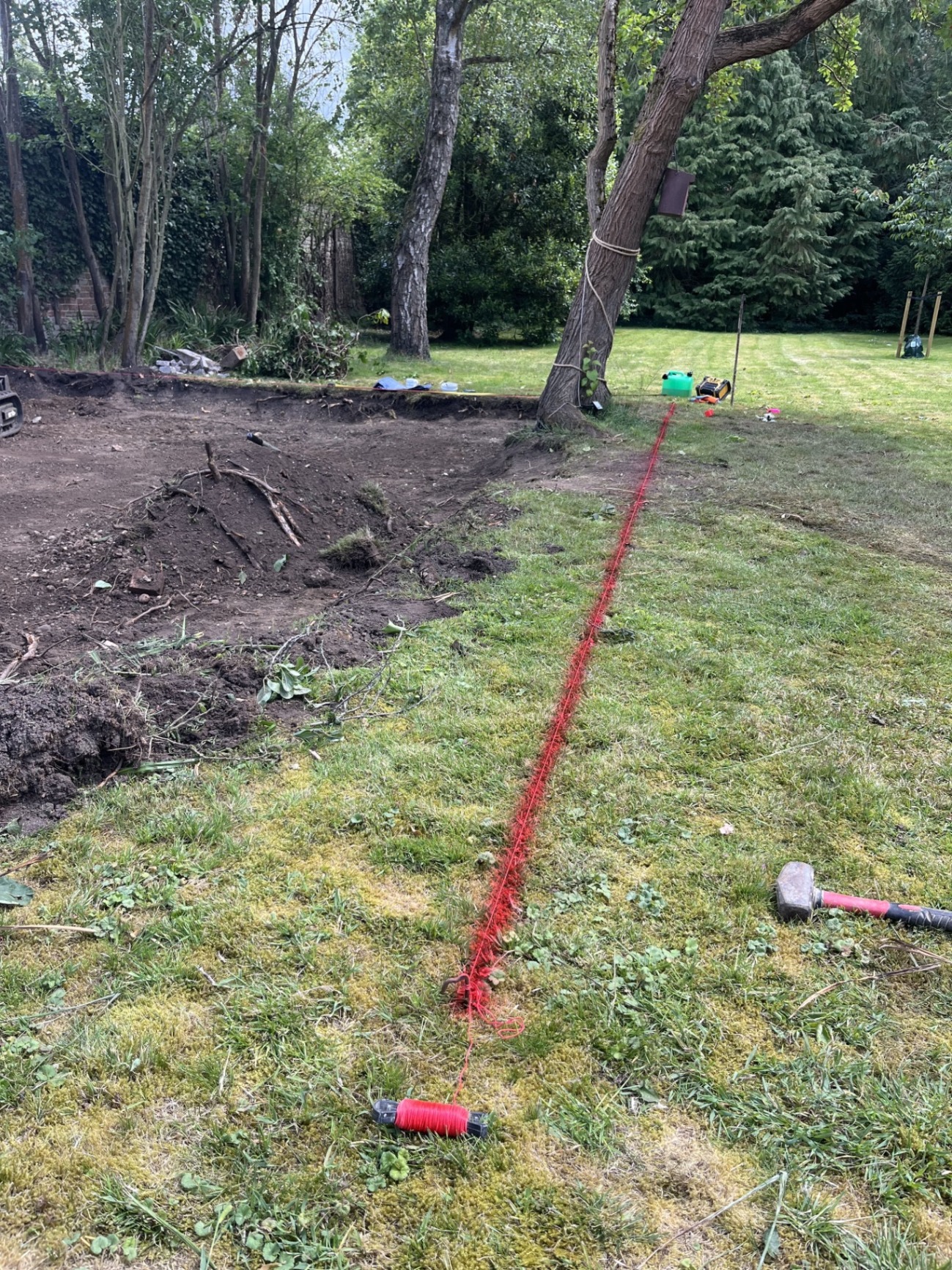
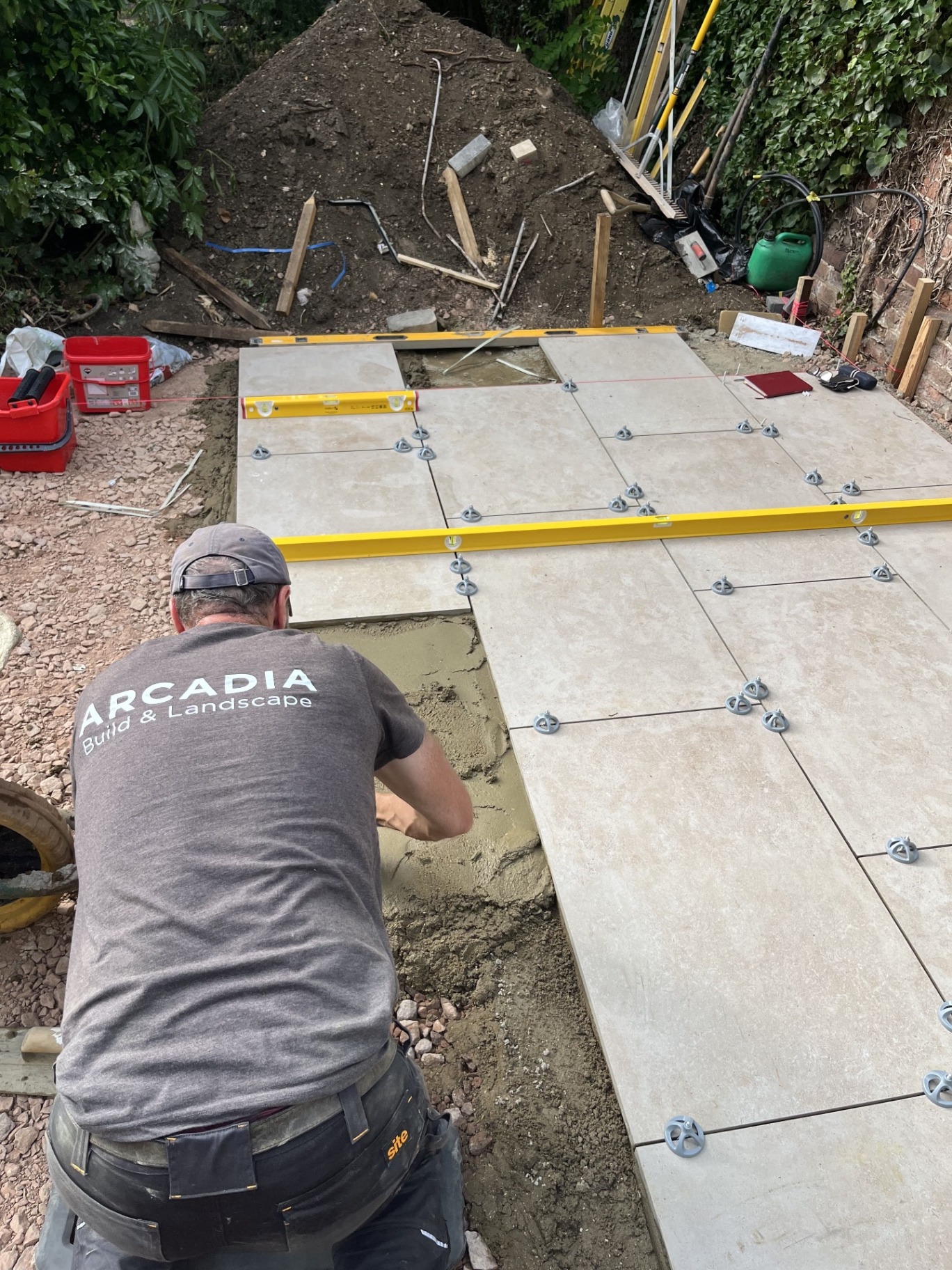
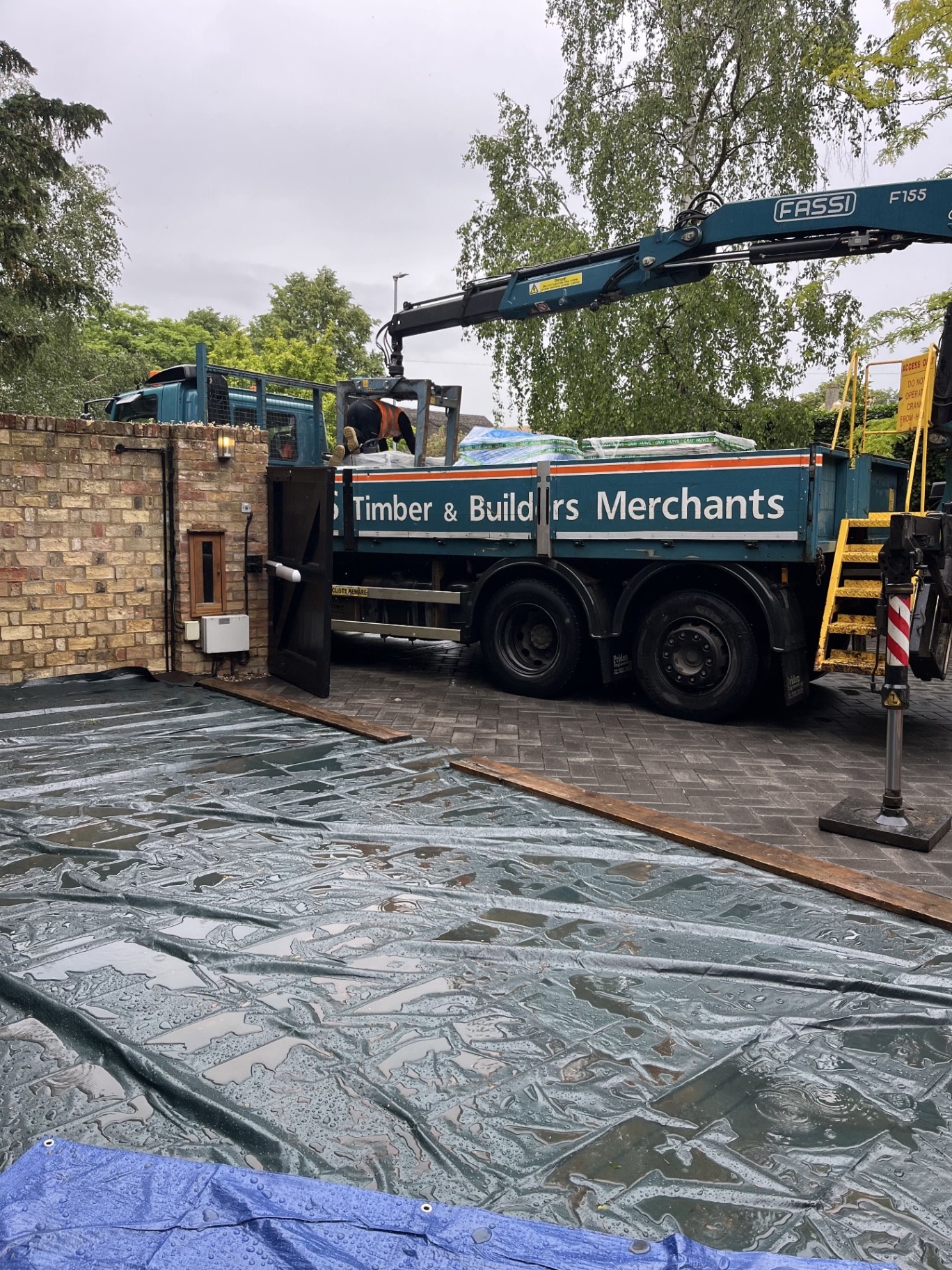
The ground. Once we started digging, we hit tree roots and genuinely soft soil that the planned sub-base depth wouldn't sit safely on. Rather than press ahead and lay £14,500 of porcelain on an unstable base, we doubled the sub-base preparation depth to 200mm - ordering and laying roughly double the MOT Type 1 originally costed for, and bringing in a micro digger and grab lorries to manage it, since access to the patio area was tight.
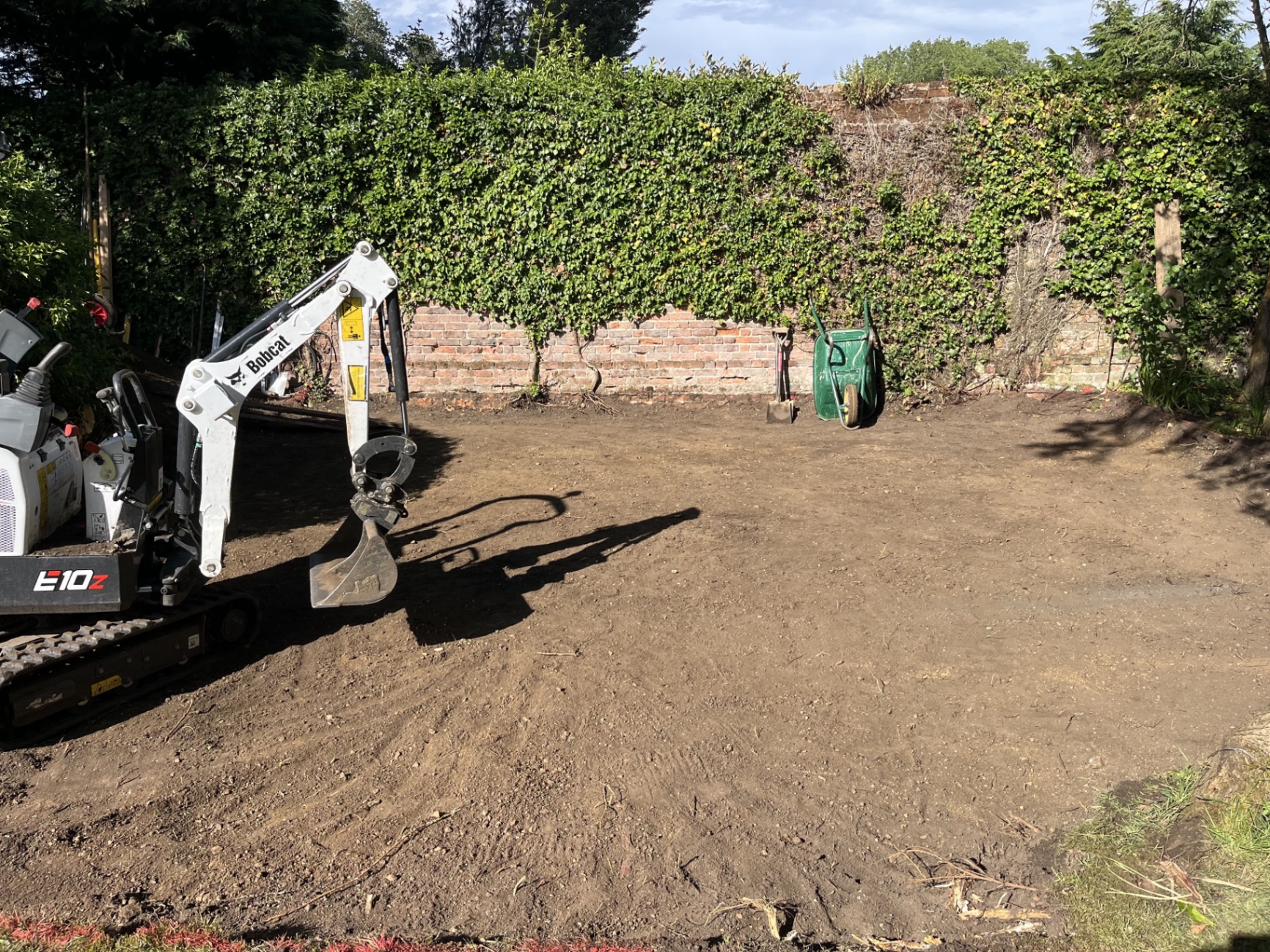
The design. This isn't a plain rectangle of porcelain. The patio includes a curved cut of porcelain around a tree, with a stone-edged circle filled with decorative stone built into the design. The whole patio is finished with a 100mm x 100mm charcoal border edging. Curved cuts, a feature circle built around an existing tree, and a contrasting border all add real time and material cost on top of standard square-edge laying - this is bespoke design work, not a simple supply-and-lay job.
That's the real difference between £259/m² and £80/m². It's not a markup. It's the combined cost of difficult ground conditions and a genuinely bespoke design, done properly rather than simplified down to protect a cheaper headline price.
What's actually included in a properly laid porcelain patio
A lot of "porcelain patio" quotes are not pricing the same job. Here's what's actually involved when it's done properly, and what we did on this one specifically:

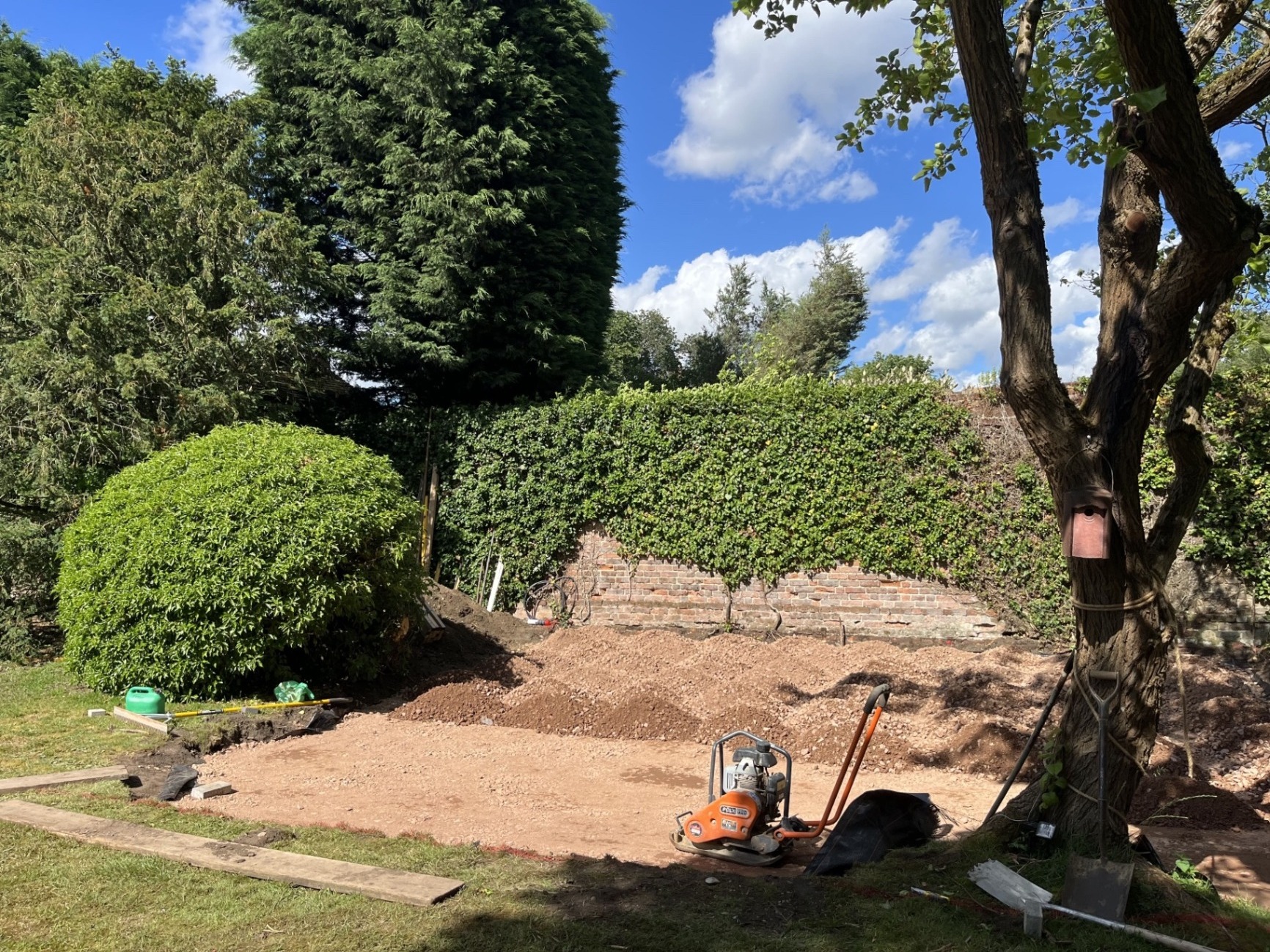
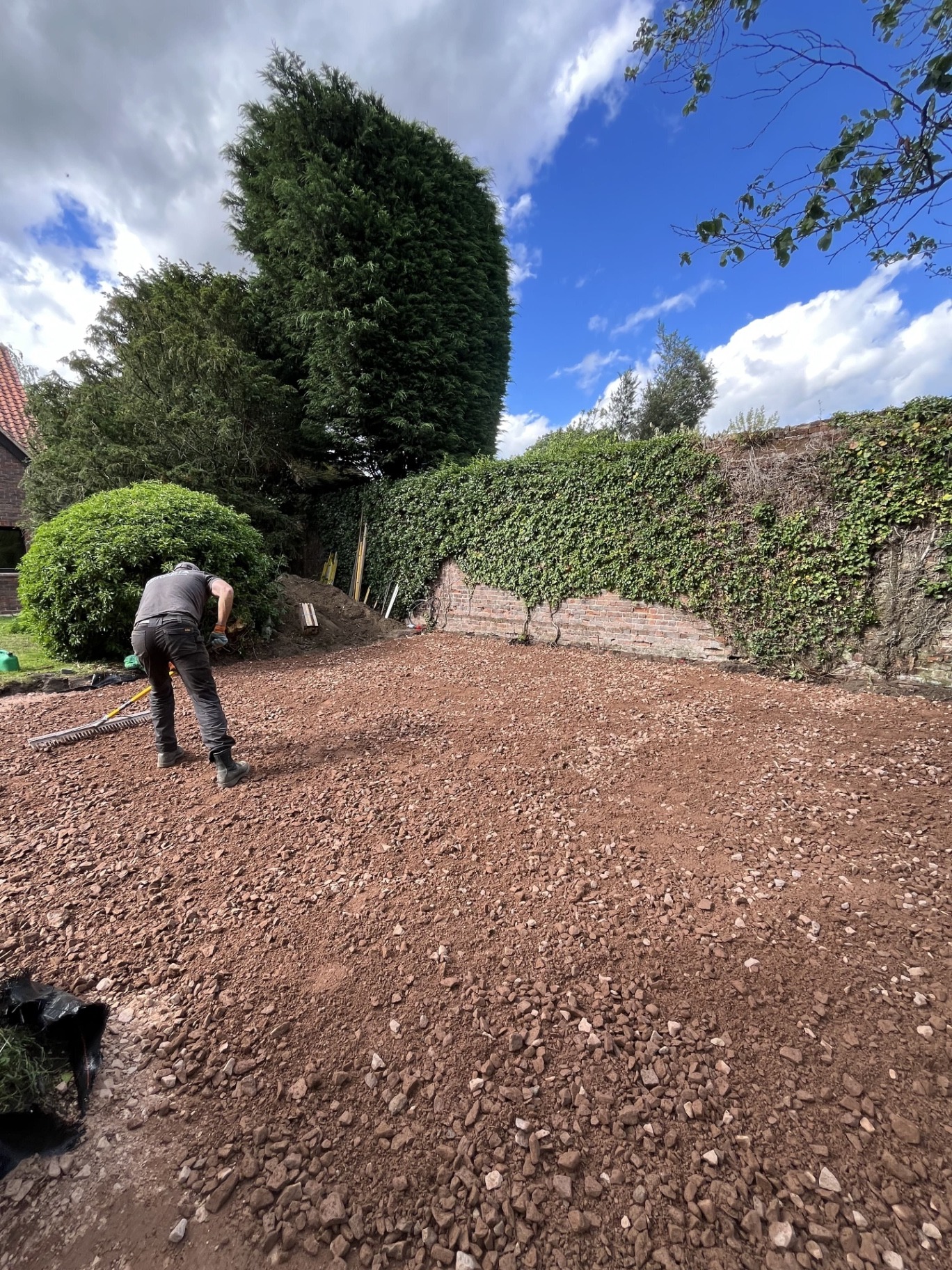
Skip any one of the groundworks steps and the price drops - but so does how long the patio actually lasts. Skip the curves and the border and you save on labour and material - but you also lose the bespoke, designed feel that separates a feature patio from a flat slab of paving.
How much does a porcelain patio cost near Huntingdon?
The honest answer is that it depends heavily on ground conditions, access, and how much design complexity is involved - which is exactly why a single "average" figure is rarely that useful.
As a general guide, simple, square-edged porcelain patios on stable ground tend to sit toward the lower end of the market range, while jobs involving difficult ground, awkward access, curved cuts, feature elements, or contrasting borders cost meaningfully more - both in materials and in the time it takes to lay them properly.
This 56m² Godmanchester job - difficult ground requiring a doubled sub-base, plus a bespoke curved design with a feature tree circle and contrasting border - came to £14,500, or £259/m². A simpler, square-edged patio of the same size on stable ground would cost noticeably less. The way to compare quotes properly isn't the headline total, it's making sure you're comparing the same scope of groundworks and the same level of design.
Do porcelain patios crack or fail?
They can - but almost always for one of three reasons: an inadequate sub-base, no slurry primer, or dot-and-dab laying instead of a full mortar bed. Get all three right, as we did on this job, and a porcelain patio should comfortably last 25-30 years with minimal maintenance.
How deep should a patio sub-base be?
100mm of compacted MOT Type 1 is standard for most domestic patios on stable ground. On softer or clay-heavy ground - more common across parts of Cambridgeshire than people expect - 150-200mm may be needed. The only way to know for certain is to start digging and assess what's actually there, rather than relying on the original plan regardless of conditions.
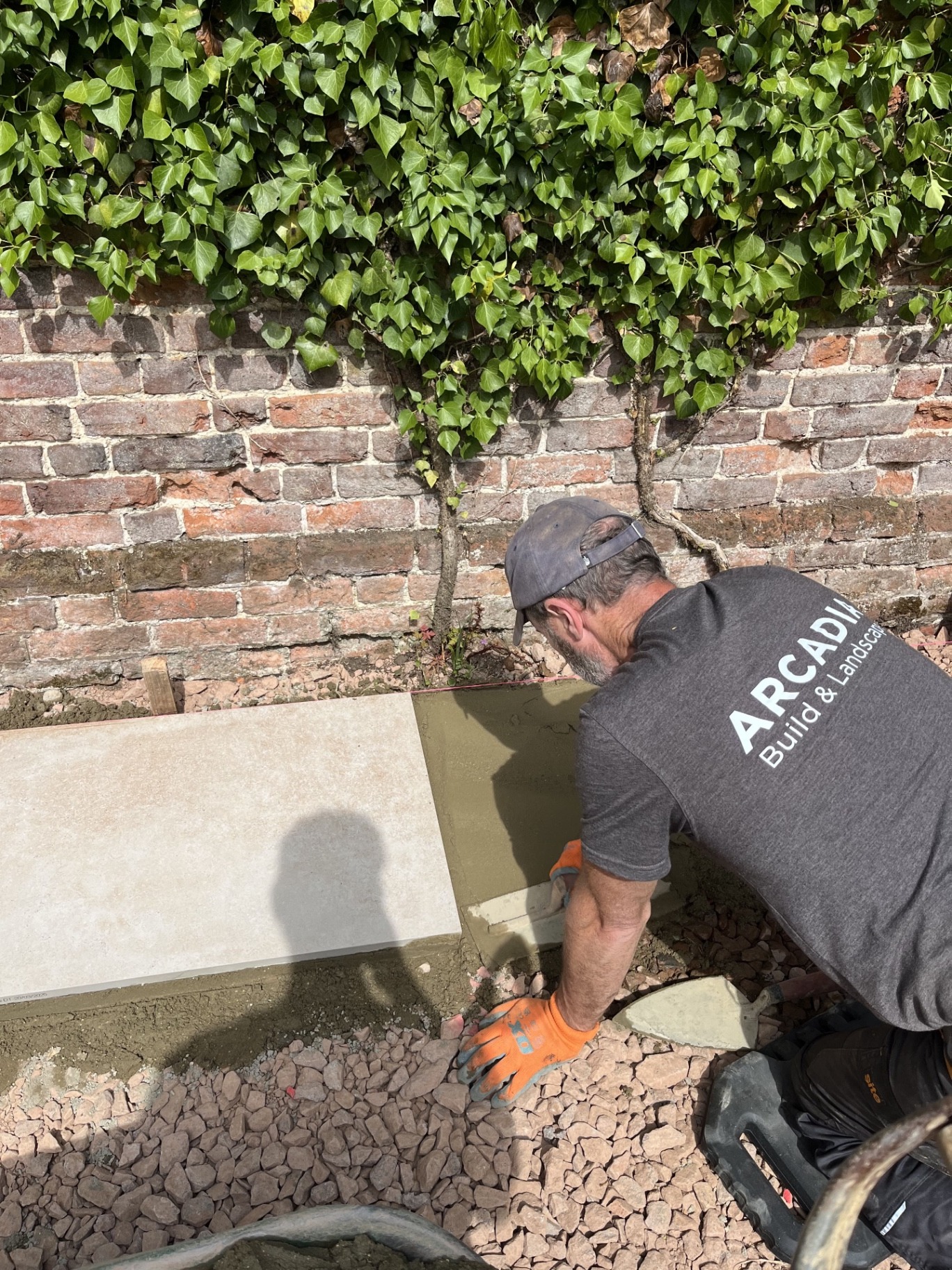
Why we doubled the sub-base instead of sticking to the original plan
A quote is based on the best information available before the first spade goes in. It isn't a guarantee about what's underground. On this job, hitting roots and soft ground meant a choice: lay the patio on the planned sub-base and risk it failing within a few years, or stop, assess properly, and adjust. We chose the second option, kept the client informed of exactly what we'd found and why the cost was changing, and got the agreed price before continuing.
The result is a patio built to last on the ground it actually sits on - not the ground we assumed it would sit on. If you're planning a patio alongside a larger project - a kitchen extension opening onto the garden, for example - it's worth coordinating the patio build with the extensions and renovations work so levels, drainage and thresholds are designed together from the start.
Porcelain patio FAQs
How long does it take to install a porcelain patio?
A typical 50-60m² porcelain patio takes around 2-3 weeks from first dig to final clean-up, weather permitting. Difficult ground, curved cuts, feature elements or bespoke borders - like the Godmanchester job - can add a week or more. Rushing the groundworks or mortar-bed stages is the single most common reason patios fail early, so we never compress those phases to hit an arbitrary date.
Is porcelain better than natural stone or concrete paving?
For most Cambridgeshire and Bedfordshire gardens, yes. Porcelain is denser, frost-resistant, non-porous and virtually maintenance-free - it doesn't need sealing, won't stain from wine or barbecue grease, and resists algae far better than sandstone or limestone. Natural stone still wins on character for some period properties; concrete is cheaper up front but rarely lasts as long or looks as sharp after a few winters.
Do porcelain patios get slippery when wet?
Good-quality outdoor porcelain is rated R11 or higher for slip resistance and is designed specifically for wet UK conditions. It's typically grippier underfoot than wet natural stone. Indoor porcelain tiles are a different product entirely and should never be used outside.
Can a porcelain patio be laid over an existing patio or concrete base?
Sometimes - but only if the existing base is structurally sound, level, free-draining and built to the right depth. In practice, most old patios fail at least one of those tests, and laying over the top traps moisture and almost guarantees movement or cracking. On nearly every project we quote, lifting the old surface and starting with a fresh sub-base is the right call.
Do I need planning permission for a porcelain patio?
For most domestic patios in Cambridgeshire and Bedfordshire, no - they fall under permitted development, provided the surface is permeable or drains to a soft-landscaped area within your boundary, and you're not in a conservation area or listed building. We engineer correct falls into every patio we lay so surface water runs to lawn or planting rather than into the public drainage system.
How much maintenance does a porcelain patio need?
Very little. An occasional sweep, a wash down with warm soapy water or a low-pressure jet wash once or twice a year, and re-pointing the joints only if they're physically damaged. No sealing, no re-staining, no annual treatment.
Looking for a porcelain patio quote near Godmanchester, Huntingdon or Cambridgeshire?
We specialise in precision-laid porcelain patios and hard landscaping across Cambridgeshire and Bedfordshire, with full sub-base preparation, mortar bedding and slurry priming on every job - done properly, whatever the ground throws at us.
Related services: Hard Landscaping & Porcelain Patios - Extensions & Renovations - Outdoor Living & Gazebos
Related reading: Outdoor Living Structures & Gazebo Build Costs - Huntingdon Landscaping - Block Paving Cost Per m²
Ready to bring your project to life?
Contact Arcadia Build & Landscape for a free, no-obligation quote on your next landscaping or building project in Cambridgeshire & Bedfordshire.